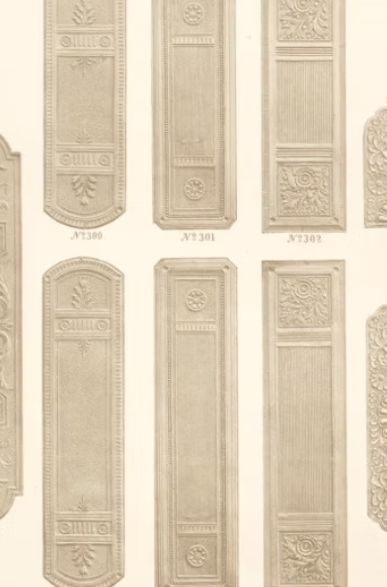
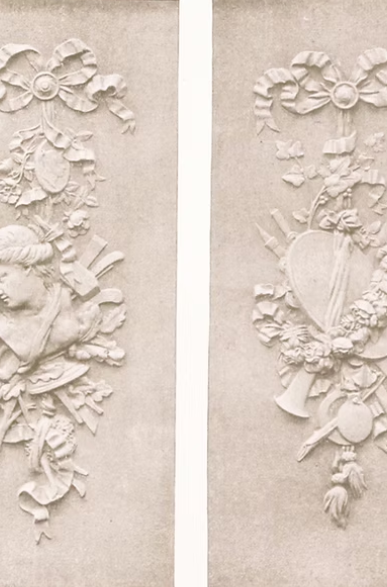
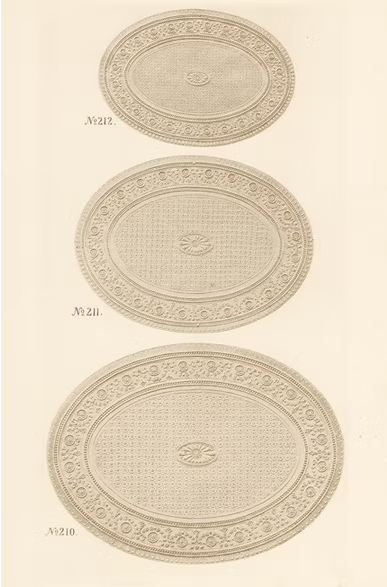
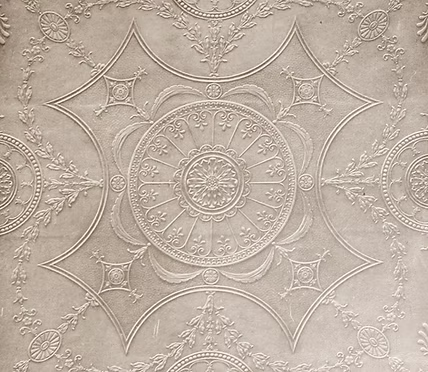
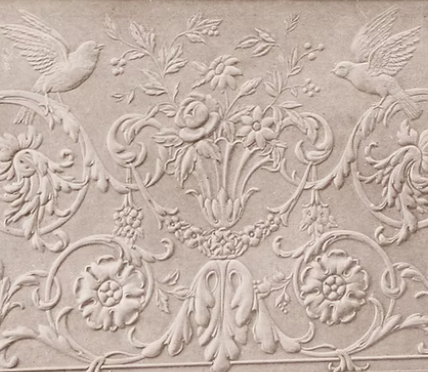
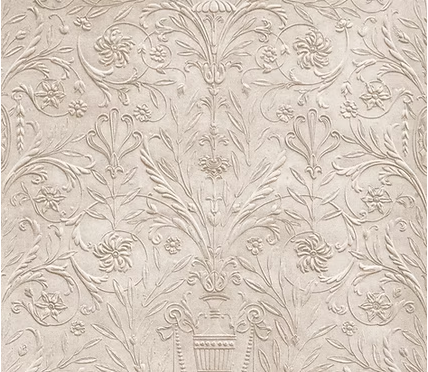
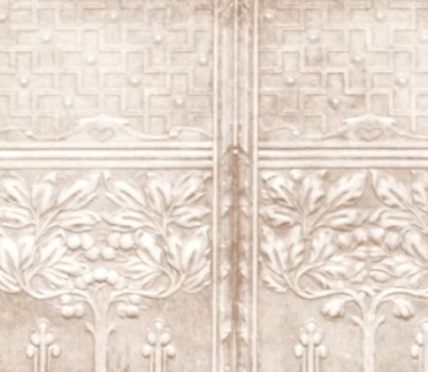
Lincrusta-Walton, established in 1877 by Linoleum inventor, Frederick Edward Walton (1834 – 1928), was a successful, linseed-oil based wall covering, which takes its name from the Latin ‘Linum’ meaning ‘Flax’ and ‘Crusta’ meaning ‘Bark’ or ‘Rind’.
The material, still in production, is mechanically mass-produced and has, over its 143-year history, produced exceptionally beautiful, highly versatile and popular designs by world renowned designers, artists and architects.
The production method of Lincrusta has remained unchanged since the 1870s, linseed oil ‘putty’ as it is known, is fed through embossing rollers, one is flat, and guides the paper backing, the other has the decoration.
Pressure is applied creating the design and adhering the paper to the back. Lincrusta-Walton was also manufactured under licence in France, Germany, Italy and the United States where it is known as ‘The King of Wallpapers’.
Interpreting Historic Decorative Surfaces and Interior Narratives
Historic interiors preserve valuable evidence of architectural taste, technological innovation, craftsmanship, and social identity. Embossed wallcoverings such as Lincrusta-Walton, Anaglypta, Lignomur, and related decorative materials provide important insight into the evolution of nineteenthand twentieth-century interior design and manufacturing.
The “Walls That Talk” initiative explores the cultural and material significance of historic decorative wall surfaces through research, interpretation, and conservation. By examining surviving decorative schemes and archival records, Lincrusta Heritage seeks to reveal the stories embedded within historic interiors and to document the craftsmanship associated with embossed raised-relief wallcoverings.
Particular attention is given to Lincrusta-Walton, first introduced in 1877 by Frederick Walton.